Understanding what to look for in a record label contract can shape the entire future of an artist's career. In the United States, a record deal is not just a financial arrangement but a long-term business partnership that governs ownership, income, creative control, and career mobility. Many artists focus on getting signed without fully grasping how record label contracts actually work.
Understanding What a Record Label Contract Really Is
A record label contract, often called a record deal contract or artist recording contract, is a legally binding agreement between an artist and a record company. In its simplest form, the label agrees to fund, distribute, and promote music in exchange for a share of the revenue and, in many cases, ownership of master recordings. What a record deal means in practice depends entirely on the language inside the contract.
Many artists asking how to get a record deal assume that signing automatically leads to income. In reality, most record label contracts operate on a recoupment model. The label advances money for recording, marketing, and distribution, then recovers those costs from the artist's future royalties before the artist receives payment. This structure explains why understanding what a record label contract looks like matters more than the excitement of a record label signing.
Modern music deals vary widely. Traditional major label agreements differ from label services deals, distribution arrangements, and 360 deals. Each structure shifts risk and reward differently between label and artist. Knowing how record deals work begins with identifying which type of music label contract is being offered and how it affects long-term income.
Core Components of a Record Deal Contract You Must Analyze
Every record label contract contains specific provisions that determine control, income, and obligations. These clauses may appear technical, but they decide how much freedom and compensation an artist receives.
| Contract Term | Meaning | Impact on the Artist |
|---|---|---|
| Term Length | Duration of the agreement | Longer terms reduce exit options |
| Exclusivity | Artist records only for the label | Limits outside collaborations |
| Advances | Upfront payment | Must be recouped |
| Royalty Rate | Artist's share of revenue | Determines earnings |
| Recoupment | Label cost recovery | Delays income |
| Master Ownership | Who owns the recordings | Affects future revenue |
| Territory | Geographic scope | Controls global reach |
| Creative Control | Decision authority | Impacts artistic freedom |
Each of these provisions interacts with the others. A record label deal with a generous advance but low royalty rates may look appealing upfront, but delay long-term income. Artists evaluating what a good record deal is should focus on how profit splits function after recoupment rather than headline numbers.
What to Look for in Royalty Rates and Financial Terms

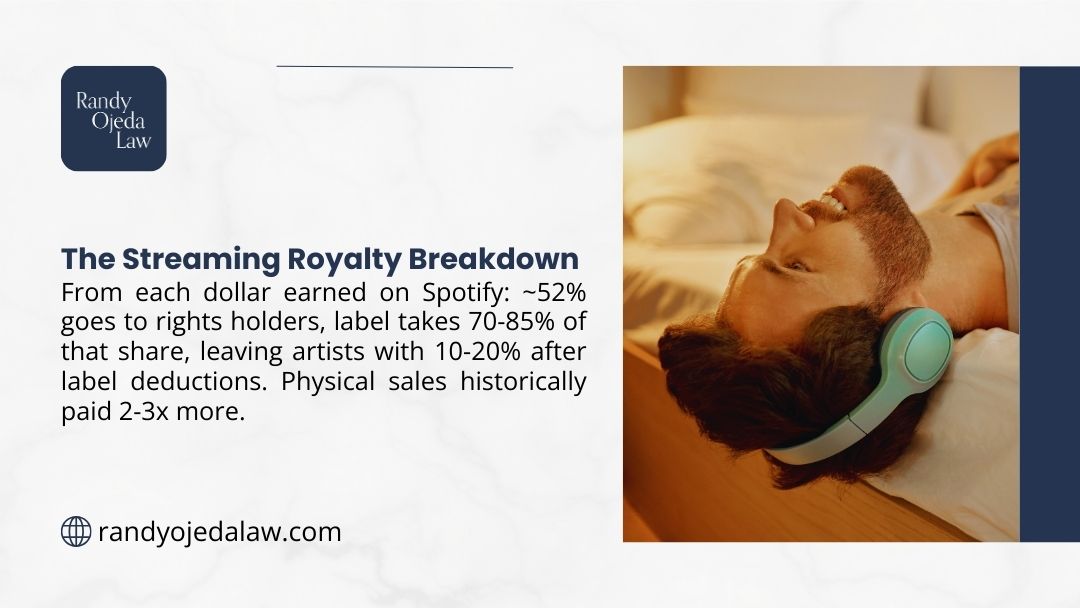
Royalty structures define how artists earn money once music generates revenue. In the United States, royalty rates in traditional record label contracts often range between 10% and 20% of net revenue, though deductions frequently apply. Streaming revenue, downloads, and physical sales may each carry different calculations.
Understanding how record labels make money is essential here. Labels collect income from streams, downloads, synchronization licenses, and sometimes touring and merchandise under 360 deals. Before signing a record deal, artists should review how each revenue stream is defined and whether expenses reduce payouts.
Recoupment is one of the most misunderstood elements of a record deal contract. Recording costs, marketing expenses, and sometimes even cover artwork costs are deducted from royalties. Industry analysis reveals that in traditional recording contracts, artists typically do not receive royalty payments until their advance and other recoupable costs have been fully recovered. In many cases, especially for newer or less commercially successful acts, this point is never reached.
Artists unsure how much record labels pay artists monthly often discover the answer is zero until recoupment completes. Learning how royalty accounting works before signing prevents false expectations and future disputes.
Creative Control, Territory, and Future Rights
Creative control clauses determine who decides what music gets released, when it launches, and how it is marketed. Many record label artist contracts grant labels final approval over recordings, singles, and promotional strategies. Artists seeking longevity should examine whether approval rights exist or whether the label holds unilateral authority.
Territory provisions also affect long-term value. A global territory gives a record company worldwide rights, while limited territories may allow artists to license music elsewhere. Artists exploring how to sign with a record label should weigh whether worldwide exclusivity is justified by the label's actual reach and track record.
Re-recording restrictions often prevent artists from releasing new versions of songs for many years. These clauses can limit future opportunities even after a deal ends. Understanding what happens when you sign a record deal includes understanding how long those restrictions survive termination.
Red Flags in Record Label Contracts Artists Must Avoid
Certain contract provisions signal disproportionate risk for artists. Indefinite option clauses allow labels to extend agreements unilaterally. Broad 360 deal provisions may grant labels a share of income unrelated to recording without providing proportional value.
Vague marketing obligations represent another red flag. If a record label deal does not specify minimum promotional commitments, the artist bears risk without guaranteed support. Artists asking how hard it is to get a record deal often underestimate how difficult it can be to exit a bad one.
Contracts that lack audit rights or transparent accounting standards often lead to long-term disputes. Without clear reporting obligations, artists struggle to verify royalties. These red flags do not always invalidate a deal, but they require negotiation and professional review before signing.

Practical Steps Before Signing Anything
Artists serious about getting a record deal should treat contract review as an essential step, not an optional expense. A qualified music lawyer evaluates whether a record label contract aligns with industry standards and the artist's career stage. Legal counsel can also negotiate improved terms around royalty rates, ownership, and creative control.
Professional review through experienced contract review and negotiation services helps artists understand hidden obligations and financial exposure. For creators unfamiliar with music law, working with counsel focused on creatives ensures the contract reflects real-world industry practices rather than one-sided assumptions.
How Record Deal Terms Shape Outcomes
| Scenario | Deal Structure | Long-Term Outcome |
|---|---|---|
| Artist-Friendly Deal | Short term, retained masters, fair royalty | Sustainable income |
| Standard Major Label Deal | High advance, long recoupment | Delayed earnings |
| High-Risk Deal | Unlimited term, low royalty | Loss of control |
These examples show why asking what the best record deal to sign is depends on individual goals. A smaller advance with higher artist royalties often produces better long-term results than a large upfront payment tied to restrictive terms.
Common Questions Artists Ask About Record Label Contracts
Artists exploring how to get a record deal often ask whether labels still matter in the streaming era. While independent distribution offers alternatives, labels continue to provide scale, capital, and access. The question is not whether to sign, but how to sign well.
Those wondering how much record labels pay in advance should understand that advances vary widely based on leverage, genre, and market demand. Advances are not income; they are loans against future earnings. Signing with a record label means entering a business relationship where success depends on alignment, transparency, and negotiation.
Artists questioning what it means to be signed to a record label should recognize that signing is not validation alone. It is a contractual commitment that shapes rights, revenue, and creative freedom for years.
Where Smart Artists Protect Themselves
Knowing what to look for in a record label contract protects artists from common industry pitfalls. Before signing a record deal, reviewing ownership of master recordings, royalty structures, recoupment terms, and exit rights preserves long-term value. Artists benefit most when contracts reflect realistic expectations rather than hype.
Creators seeking informed guidance often consult professionals who focus on music law and artist advocacy. For personalized advice on record label contracts, artists can connect directly with Randy Ojeda to understand the realities of the modern music industry.