How long do record contracts last is one of the most misunderstood questions in the music industry. Some artists assume a record deal ends after one album. Others believe signing to a record label means a lifetime commitment. The reality sits between those extremes, shaped not by calendar years alone, but by leverage, options, and ownership clauses buried deep in the recording contract.
This guide explains how long record contracts last, what actually extends them, and why many artists remain tied to labels long after they believe the deal is over.
What a record deal really is and why contract length matters
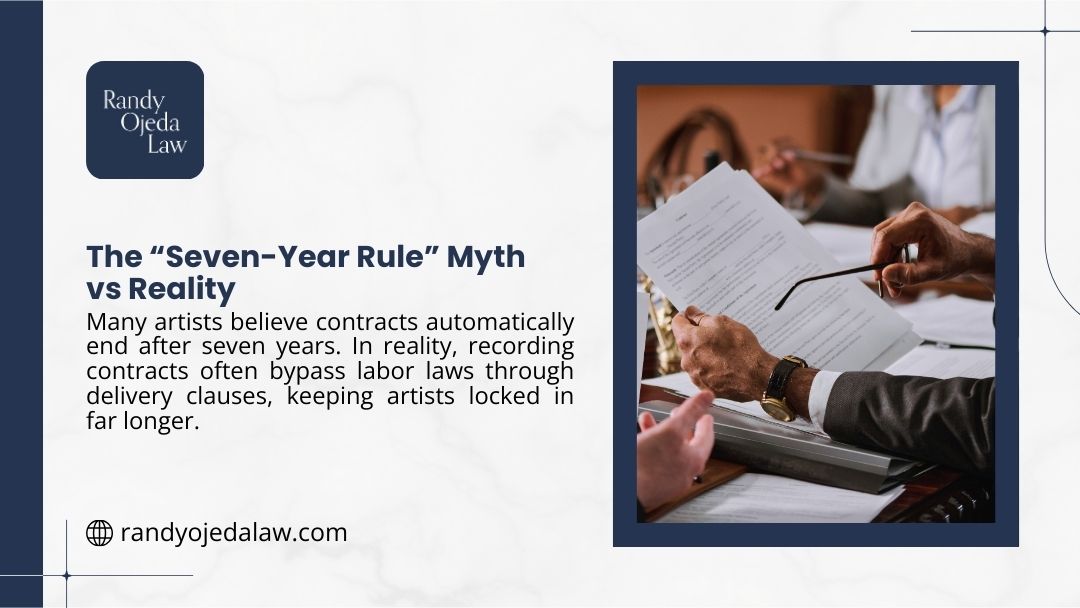
A record deal is not simply permission to release music. It is a legal framework that guides the relationship between artists and record labels, defining ownership, royalties, creative control, and exclusivity. Recording contracts focus on obligations, not clocks.
Most artist recording contracts require delivery of recordings that meet the label's standards. If a project is rejected, the contract often pauses. Time passes, but the agreement does not terminate. This is where confusion begins, especially for artists trying to understand what it means to be signed to a record label.
Two artists can sign similar record deals and experience entirely different timelines based on how quickly recordings are accepted and released.
How long do record contracts last in the music industry?
How long do record contracts last depends far more on control than on time. On paper, many recording contracts appear short, often structured around a one-year initial term or a single album commitment. In practice, those same record deals can stretch for many years once options, exclusivity, and delivery requirements come into play.
A standard record deal usually binds an artist to a record company for an initial release period, followed by several options that only the label can exercise. Each option typically extends the agreement by another album or release cycle. When artists ask how long do record contracts last, the honest answer is that the deal lasts as long as the label continues to say yes.
This explains why artists signed to major labels often remain under a recording agreement for seven, ten, or more years, even when their discography during that time appears surprisingly small.
Typical lengths of record deals in today's music industry
Although every record deal contract is negotiated individually, patterns emerge when reviewing label deals across the industry.
| Deal Structure | Initial Term | Options | Total Possible Length |
|---|---|---|---|
| Major label deal | 1 year | 4–6 album options | 5–10+ years |
| Independent label deal | 1 year | 1–3 options | 2–4 years |
| Distribution-focused deal | 1–2 years | Limited or none | 1–3 years |
| Exclusive license deal | 2–5 years | Renewal clauses | 3–7 years |
Many artists are surprised to learn that signing record deal paperwork rarely creates a short-term relationship. When every option is exercised, a signed record contract can legally bind an artist for close to a decade.
Initial term versus options in recording contracts
At first glance, many recording contracts look short. An artist sees a one-year term and assumes the commitment is limited. That assumption rarely survives closer inspection. The real duration of a recording contract comes from how the initial term interacts with the option structure that follows.
The initial term is the opening phase of the deal. It is usually tied to the delivery and acceptance of the first album or project. Once that phase ends, control often shifts entirely to the label through a series of unilateral options. Each option gives the record company the right to extend the contract without needing the artist's consent.
The distinction between these two elements explains why artists frequently underestimate how long record contracts last in practice.
| Contract Element | Who Controls It | What It Covers | Effect on Total Length |
|---|---|---|---|
| Initial term | Artist and label | First album delivery and release | Starts the deal |
| Label option | Record label only | Additional albums or projects | Extends the deal automatically |
| Option exercise period | Record label | Decision window to continue | Can pause or lengthen timeline |
| Option exhaustion | Contractual | Final option used or declined | Determines the true end date |
Understanding this structure is critical. A short initial term paired with multiple options can quietly bind an artist for many years, even when each phase appears reasonable on its own.
Why record labels use options to extend deals
Options exist because record labels operate on long development cycles, not short creative bursts. Labels invest capital, staff time, and marketing resources long before a project generates revenue. Options give them flexibility to manage that risk over time.
From the label's perspective, options function as checkpoints rather than guarantees. If an artist gains traction, the label can continue the relationship without renegotiating from scratch. If momentum stalls, the label can decline the option and limit losses. That asymmetry is intentional.
Options also preserve leverage. When an artist becomes successful during the initial term, the label's option rights prevent immediate free agency. The artist may gain visibility, but the contract keeps competing labels out of the picture until the option window closes.
Another reason options persist is the catalog strategy. Labels value consistency. Keeping multiple releases under one contract allows them to plan release schedules, coordinate marketing arcs, and amortize costs across several projects. Options make that planning possible.
For artists, the risk is subtle. Each exercised option extends exclusivity, sometimes without improving financial terms. That is why understanding how options operate matters just as much as understanding royalty percentages.
What happens when a record contract ends
When a record contract terminates, the label's control often continues. Many recording contracts include exploitation clauses that allow the record company to profit from recordings long after the term ends.
Ownership of masters rarely reverts automatically. Even when options are exhausted, the label may retain full control of previously delivered recordings.
| Contract Status | Label Rights Continue | Artist Control |
|---|---|---|
| Contract term expires | Yes, via exploitation clauses | Limited |
| Options exhausted | Yes, masters remain owned | Limited |
| License deal expires | Sometimes | Often returns |
| Buyback negotiated | No | Full control |
This distinction explains why artists may still earn royalties years after leaving a label while having little say in how their music is used.
Perpetual rights and master ownership in record deals
Perpetual rights remain common in record label deals, particularly when the label owns the masters outright. While the recording agreement itself may terminate, ownership does not necessarily follow.
Under U.S. copyright law, sound recordings are protected for 95 years from publication under 17 U.S.C. A poorly negotiated deal can therefore outlive the artist. This is why negotiating contract length and ownership terms together matters more than focusing on advances alone.
Album-based contracts vs time-based recording agreements
Album-based recording contracts remain the industry standard, especially with major labels. Time-based agreements appear more often in licensing or independent arrangements.
| Contract Structure | How It Works | Risk Level | Common Use |
|---|---|---|---|
| Album-based | Artist must deliver accepted albums | High | Major label deal |
| Time-based | Contract ends after a fixed term | Medium | Indie or licensing deal |
| Exclusive license | Label controls releases temporarily | Medium | Distribution-focused deals |
Album-based deals create uncertainty. Time-based agreements offer clearer exit points but usually involve lower upfront investment. This difference matters when evaluating what the best record deal to sign is.
Why artists stay signed longer than expected
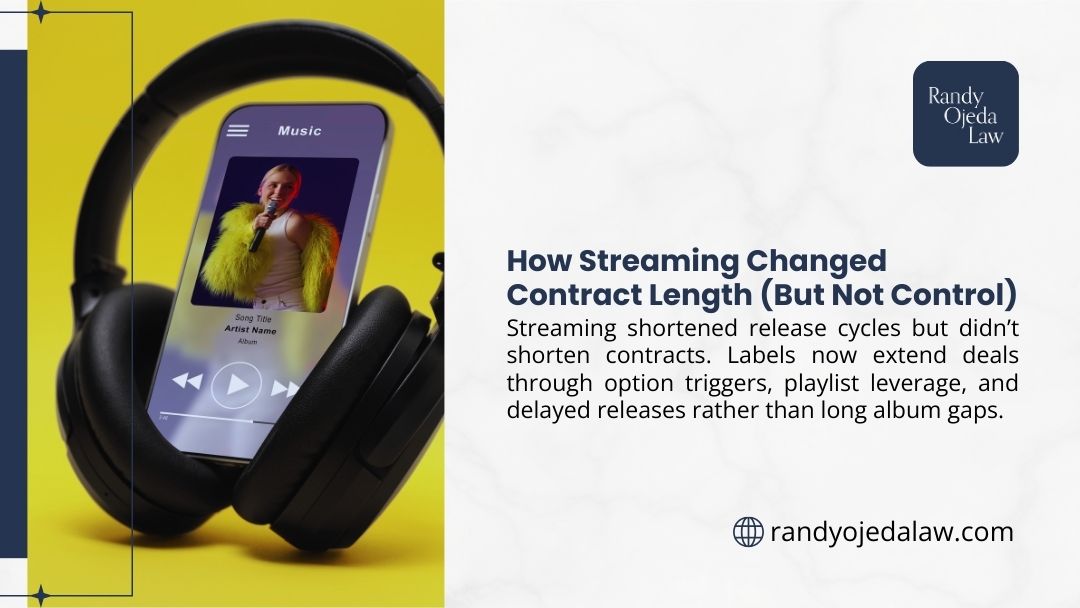
Contracts do not expire simply because time passes. If a label delays releases, rejects masters, or shelves music, the artist remains bound. Cross-collateralization can further extend the financial relationship, preventing meaningful artist royalties even after multiple releases.
The U.S. Copyright Office notes that royalty accounting often continues long after the active term ends, reinforcing how music industry contracts function beyond release cycles.
What happens to royalties during and after the contract term
Record labels do not pay artists monthly in most cases. Royalties are paid after recoupment and subject to accounting periods. Mechanical royalties, statutory mechanical rates, and controlled composition clauses all affect how much record labels pay artists over time. Understanding how long do record contracts last requires understanding how long money remains tied up.
Can you break a record contract early?
Breaking a signed record contract is difficult but not impossible. Early termination usually depends on breach, failure to release recordings, or unmet performance obligations.
Some agreements allow termination if the label fails to commercially release music within a defined period. Others require arbitration or litigation. This is where guidance from a music contract negotiation lawyer becomes critical when evaluating exit strategies before disputes escalate.
Artists who sign long-term agreements without understanding termination clauses often discover too late that time alone does not free them.
Factors that affect how long record contracts last
The stated term of a record deal rarely tells the full story. Several operational and legal factors can stretch a contract far beyond its expected end date.
| Factor | How It Extends the Contract | Why It Matters |
|---|---|---|
| Album delivery requirements | Delays progression to the next term | Unaccepted albums stall timelines |
| Release obligations | The clock may not start until release | Shelved projects freeze movement |
| Recoupment status | Financial balance affects leverage | Unrecouped artists lack exit power |
| Option exercise windows | Pauses between terms | Adds months or years |
| Cross collateralization | Ties multiple projects together | Prevents clean separation |
| Re-record restrictions | Limits post-contract freedom | Extends practical control |
These elements operate quietly. Artists often focus on signing bonuses and ignore procedural language that controls when the contract actually moves forward.
How long do record contracts last for new artists vs established acts
New artists often sign longer deals because leverage is limited. Established acts negotiate shorter terms, licensing structures, or reversion clauses.
| Artist Level | Typical Contract Length | Leverage |
|---|---|---|
| New artist | 5–10 years possible | Low |
| Mid-level artist | 3–6 years | Moderate |
| Established artist | 1–3 years | High |
This difference explains why industry veterans caution against rushing into a record label deal without proper review.
What to look for before signing a record deal
Before signing a record deal contract, artists should focus on duration language, option control, master ownership, and post-term restrictions. Controlled composition clauses and cross collateralization often cost more over time than headline royalty rates suggest.
Knowing what to look for in a record label contract makes it easier to spot clauses that affect ownership, royalties, and long-term control.
Why legal review matters before signing a record deal
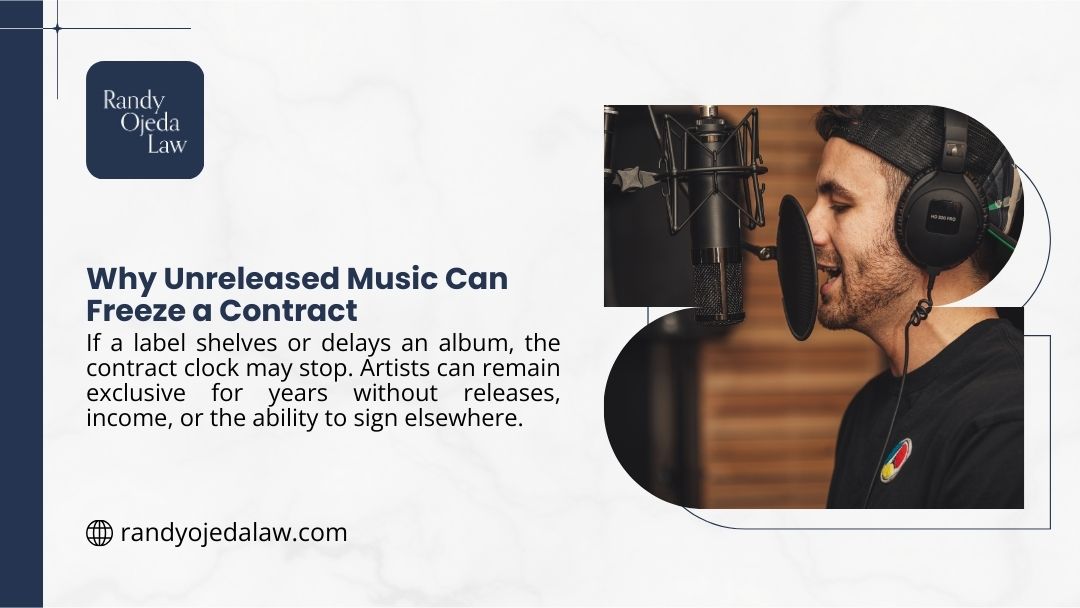
Reading a record deal is not the same as understanding it. Recording contracts are drafted to function as systems, not isolated promises. A clause that seems harmless on its own may carry consequences when combined with definitions buried elsewhere.
Legal review matters because duration is rarely confined to one section. Term length interacts with delivery standards, acceptance rights, release schedules, and ownership provisions. Without professional analysis, artists may miss how those pieces connect.
Another issue is predictability. A lawyer familiar with music industry contracts can identify clauses that routinely extend deals beyond expectations. That foresight allows artists to negotiate protections before leverage disappears.
Most importantly, review shifts the power dynamic. Labels expect negotiation from informed parties. Artists who enter discussions with legal guidance are more likely to secure clearer exit points, fairer ownership terms, and realistic timelines.
In an industry where a single signature can shape a decade, legal review is not an added cost. It is risk management.
Why this matters before you sign anything
Record contracts shape careers for decades, not months. Once signed, undoing a bad deal takes time, money, and leverage most artists lack early on.
If you are considering signing with a record label or reviewing a recording agreement, speaking with a qualified music lawyer who represents artists can prevent years of regret. Learn more about artist-focused legal support from Randy Ojeda or reach out directly to ask the right questions before the ink dries. That is how artists protect not just their music, but their future.