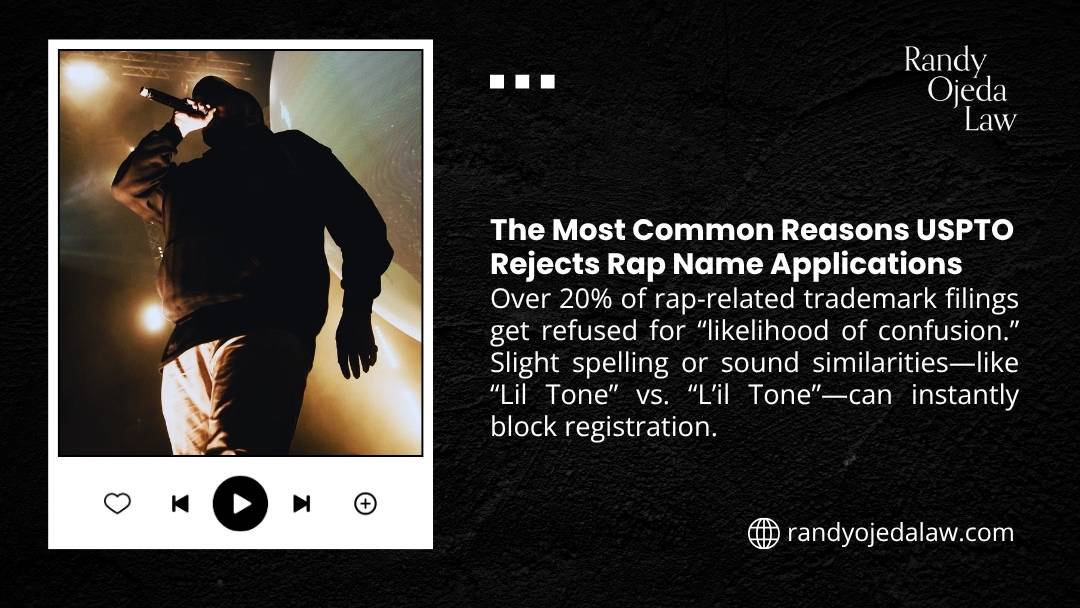
Music is no longer just about sound; it is a brand economy. In 2025 alone, more than 820,000 trademark applications were filed with the United States Patent and Trademark Office (USPTO), and a growing share came from independent artists and music entrepreneurs. Yet most musicians releasing music on Spotify, Apple Music, or YouTube still do not legally own their name.
The question "Should I trademark my artist name?" is not a legal technicality. It is a business decision that determines who controls your identity, who gets paid first, and who has the legal right to stop others from using your brand. Many artists assume online presence equals ownership, but under U.S. law, the USPTO recognizes the first to file, not the first to use.
Once an artist starts releasing music, selling merch, signing agreements, or building an online identity, they are already at risk of losing their name to someone else who files first. This article explains what trademark protection actually does, when it becomes essential, how it differs from copyright and LLC registration, and the serious consequences of waiting too long, including forced rebranding, takedowns, and financial damage.
Why "Should I Trademark My Artist Name?" Is a Serious Turning Point
This question usually appears at a moment when an artist is transitioning from casual creativity to a serious business identity. It is rarely asked by hobbyists who are privately experimenting with music. It is almost always asked by artists who are already releasing music, building an audience, being approached for collaborations, signing distribution deals, or preparing to scale their career.
At this stage, the artist's name is no longer just an idea. It becomes intellectual property with commercial value. If another person files a federal trademark first for the same or confusingly similar artist name, the original artist may be legally restricted from using their own identity nationwide, even if they released music first on digital platforms.
This is why this question signals a business inflection point. It represents the moment an artist must decide whether they are willing to risk losing the brand they are building.
| Protection Status | Ownership Power | Practical Risk |
|---|---|---|
| No official protection | None | Anyone can take your name legally |
| Just using it publicly (common law) | Very weak and local | Can still be forced to rebrand |
| USPTO registered trademark | Strong federal ownership | You secure exclusive nationwide rights |
When artists reach this point and ask, "Should I trademark my artist name?" it is no longer about idea validation. It is about whether they are ready to protect an identity that has become publicly valuable.
What Trademarking Your Artist Name Actually Does
Filing a trademark with the USPTO legally secures your identity nationwide in the United States. It officially grants you exclusive rights to use your artist name for music, live performance, entertainment, merchandise, or whatever categories you file under.
It gives you government-backed legal authority to stop others from using your name, not just in court, but quickly and directly on platforms like Instagram, Spotify, TikTok, and merch providers. It also allows investors, labels, and brand partners to verify that your identity is legally yours before entering into any contract with you.
Important Distinction
Trademarking does not protect your music itself. That is covered by copyright. It also does not replace forming an LLC, which handles business structure and tax accountability. Trademarking is purely about identity protection: the legal right to own and use your name in commerce without legal threat.
Artists who do not trademark are not invisible. They are simply unprotected.
When Trademarking Is Smart, and When It Is Optional (Temporarily)
Trademarking is not always urgent. It becomes urgent based on how public and committed your identity has become. Below is the simplest and most accurate way to determine urgency.
| Current Artist Scenario | Trademark Urgency |
|---|---|
| Still experimenting privately, name not visible online | Optional for now |
| Name already on Spotify, Apple Music, YouTube, etc. | Strongly advised |
| Paid shows, collaborations, or early brand deals | Critical timing |
| Interest from labels, agencies, PR, or distribution | Immediate priority |
The moment your name exists publicly in a commercial setting, waiting becomes a business risk. Trademarking is not about confidence. It is about timing.
The Legal Problem Artists Don't See Coming
Most artists believe that being first to use a name publicly secures ownership. This is not true under U.S. federal law. Trademark rights are strongest for the person or entity that formally registers the name first with the USPTO.
If someone else files a trademark for your artist name before you, even if they are smaller or newer, they may become the legal owner. This can result in takedown notices, account suspensions, performance cancellations, and forced renaming even after an artist has built momentum.
Critical Warning
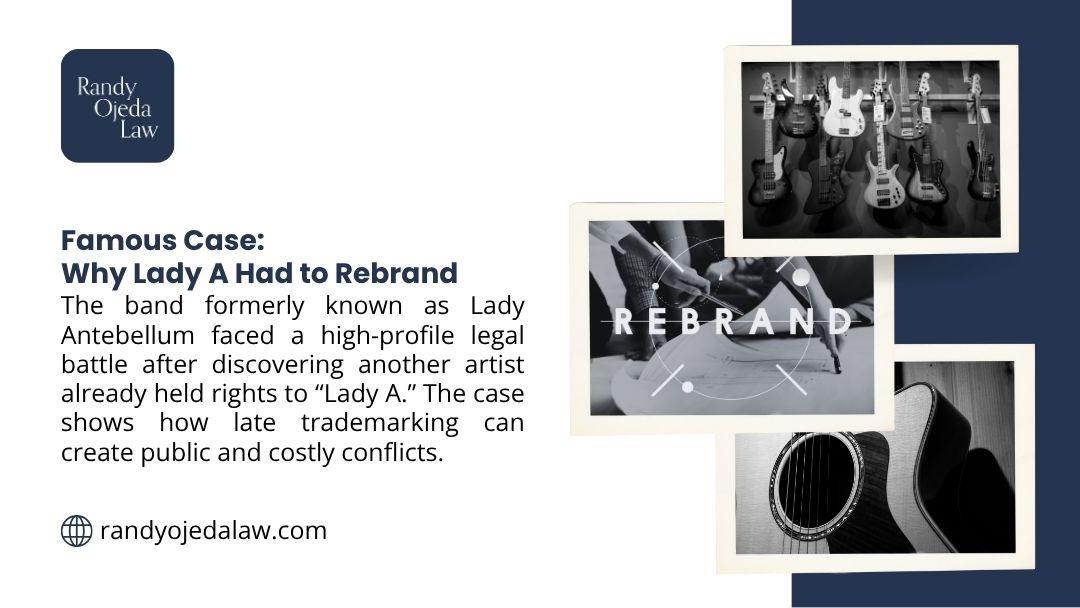
In many documented cases, artists have had to abandon years of branding and restart under a new identity because they tried to trademark too late. The longer you wait, the higher the risk that someone else claims your name first.
| Legal Event | Real Consequence |
|---|---|
| Another person trademarks your name before you | You may legally lose it even if you were first to use it |
| Streaming platforms flagged for identity conflict | Your verified artist page can be renamed, frozen, or removed |
| Booking agents or labels request legal proof of ownership | You cannot provide it, and deals fall through |
| A legal cease-and-desist is issued against you | Forced to rebrand mid-career |
Artists who trademark early do not wait for disaster. They avoid ever facing it. A practical case of how legal ownership changes everything is explained by a music intellectual property lawyer.
What Trademarking Your Artist Name Actually Gives You
Registering a trademark does not just protect your name defensively. It transforms it into a registered business asset. That means labels, DSPs, brand partners, merch manufacturers, and platforms respect it as a formal entity rather than a casual alias. It also gives you legal authority to file takedown actions quickly if someone else copies or imitates your name, intentionally or unintentionally.
| Legal Benefit | Real-Life Effect |
|---|---|
| Exclusive nationwide ownership | You are legally recognized as the only rightful user |
| Power to remove copycats instantly | Platforms respect your notices without dispute |
| Professional confidence for deals | Labels and sponsors view you as commercially secure |
| Expandable protection to merch, touring, licensing | Future business moves become legally safe to execute |
Trademarking is the difference between hoping your name survives and knowing it will.
When Not to Trademark Your Artist Name Yet
If you have not released anything publicly under your chosen name and are still experimenting privately, trademarking is premature. Trademarking finalizes identity. It is not a casual placeholder.
If you expect that your artist identity will change branding direction soon, waiting is reasonable. But the moment your name is tied to anything searchable, streamed, sold, promoted, or contractually mentioned, legal vulnerability begins. Waiting is only safe when nobody else knows your name exists.
When It Is Already Dangerous Not to Trademark
The danger begins not when you blow up, but the exact moment you start to exist publicly as an artist. Streaming distribution counts as public existence. Monetization counts. Pre-save campaigns count. Brand partnerships count.
All of these make your artist name a commercial identity, and therefore legally available for someone else to file before you. Here is where the danger becomes real, as explained by a music contract review lawyer. Few artists expect conflict. Many experience it without warning.
Trademark vs. Copyright: Not the Same Thing
Artists often confuse copyright and trademark, believing one covers both issues. That misunderstanding leads to serious legal mistakes. They are completely separate federal protections.
| Legal Protection | Used For | Filed Through |
|---|---|---|
| Trademark | Name, logo, brand identity | USPTO |
| Copyright | Song, album, lyrics, artwork | U.S. Copyright Office |
Copyright protects the art. Trademark protects the identity of the artist. Filing one does not replace the other. A detailed breakdown can be found in our guide on how to copyright your music.
Federal Trademark vs. LLC: Major Misunderstanding
Forming an LLC does not lock the rights to your artist name. It only creates a business structure for tax and liability. A trademark is the only way to own your artist identity in the eyes of streaming platforms, labels, and U.S. law.
| Action | What It Legally Does | What It Does Not Do |
|---|---|---|
| Form an LLC | Creates a business entity | Does not guarantee name ownership |
| File a trademark | Grants exclusive nationwide ownership | Does not replace LLC if needed |
Both matter, but they serve completely different purposes. You do not get one instead of the other.
The Bottom Line
If your artist name exists publicly and is not a temporary testing identity, then yes, you should trademark your artist name before someone else legally claims it. The more your name grows, the more valuable it becomes, and the more likely it becomes a target for accidental or intentional conflict.
Conclusion: The Only Safe Next Move
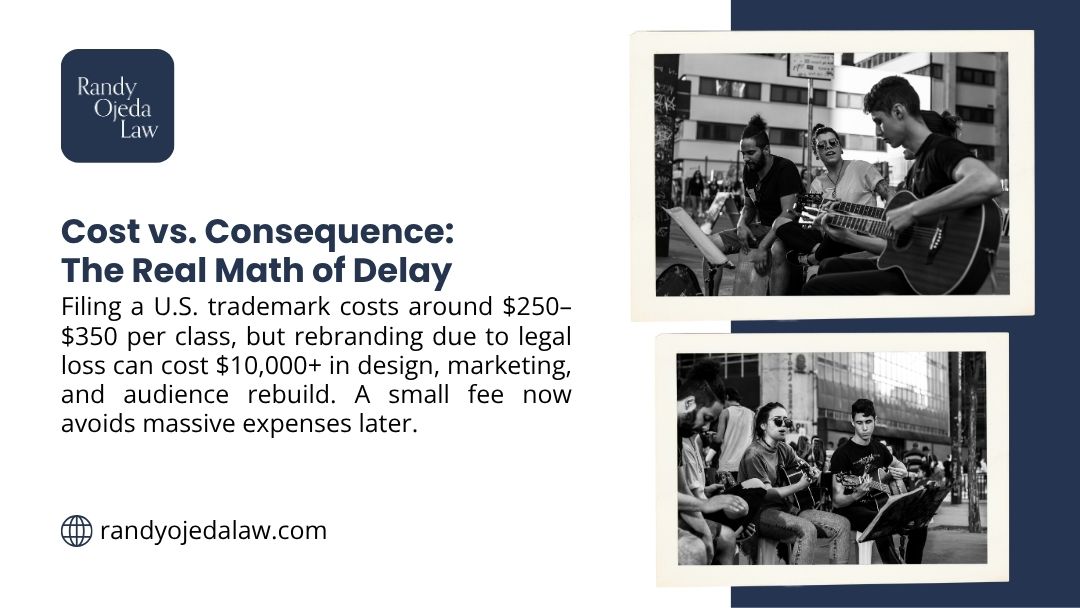
If your artist name is already on streaming platforms, tied to revenue, brand presence, professional communication, or future business planning, delaying trademark registration is an open invitation for legal risk.
Once someone else files first, even by accident, you can lose your identity in a matter of weeks, regardless of creative history, audience loyalty, or prior uploads. Trademarking is not about confidence. It is about securing what you do not want to rebuild later under pressure.
To lock your artist name legally and permanently with a real music attorney, start your protection process with an experienced music lawyer before anyone else files ahead of you. Your name only becomes yours when the law says so, not when the internet knows it.