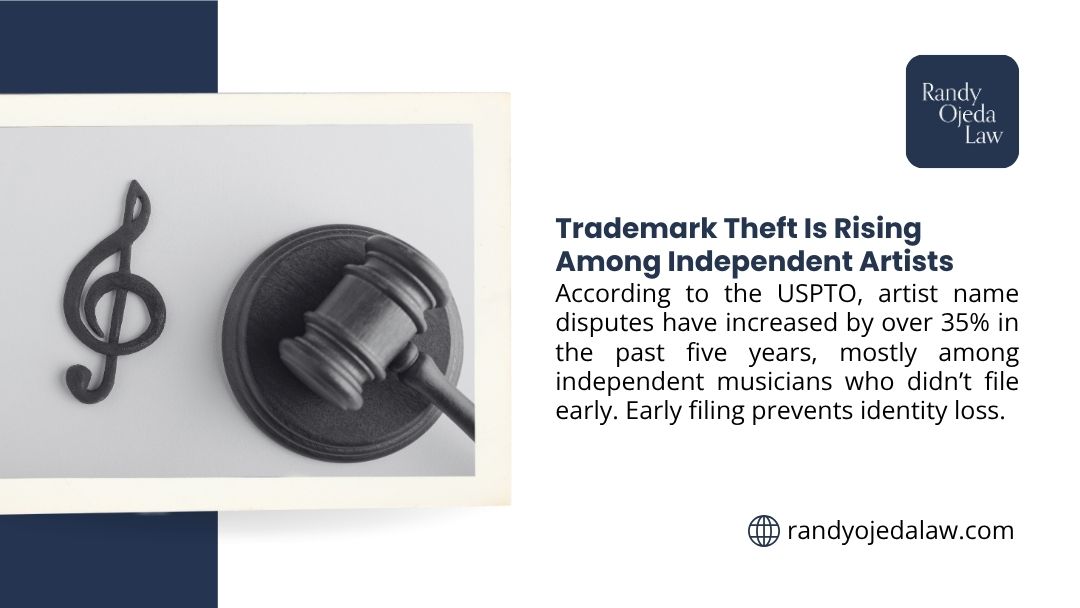
More than 11 million artists are tracked on music platforms today. That's a lot of competition for the same potential fans, same venue slots, same record label attention. The U.S. recorded music industry alone pulled in $18.2 billion last year. But spend years building a following under your artist name, and someone else could swoop in tomorrow and use that exact same name.
That's where learning how to trademark an artist name comes in.
What Does It Mean to Trademark an Artist Name?
Trademarks work differently than copyrights, and a lot of musicians get this mixed up. Copyright covers the actual music: the songs, recordings, compositions. A trademark is about protecting the name itself, the brand identifier that tells people who's behind the music.
When an artist's name gets trademarked, it means nobody else can legally use that name (or something confusingly similar) for music stuff nationwide. Can't perform under it. Can't sell albums under it. Can't book shows under it.
Most artists who know what they're doing work with music lawyers for this. The process has too many gotchas to wing it, and mistakes cost way more than just hiring someone who knows the system.
Why Trademarks and Copyrights Aren't the Same Thing
The second a song exists in recorded form, even just a voice memo, it's copyrighted. No registration required, though formally registering copyrights makes enforcement easier if someone steals the work.
Trademarks don't work like that. They protect the commercial identity tied to creative output, not the output itself. Think about it this way: copyright stops someone from recording a cover of a song without permission. Trademark stops someone from calling themselves by the same artist name and confusing the audience about who's actually performing.
Both matter, but they protect different things. A music intellectual property lawyer can explain how to use both types of protection together. Missing either one leaves gaps that smart competitors (or outright thieves) will exploit.
Why Bother Trademarking an Artist Name?
Some artists wonder if trademark registration is worth the hassle and expense. Here's what it actually does:
First, it gives exclusive legal rights to that name across the entire U.S. for music-related business. That exclusivity matters when fans are searching Spotify, buying concert tickets, or looking for merchandise. Without a trademark, there's nothing stopping another act from using the same name and siphoning off attention and money.
Second, it shuts down imposters fast. Fake social media accounts pop up constantly. Unauthorized merch gets sold on sketchy websites. People even book gigs pretending to be established artists. A registered trademark gives legal tools to kill these scams quickly instead of watching helplessly while someone damages a reputation that took years to build.
Third, merchandise becomes a real revenue stream once an artist's name is trademarked. Can't license the name for t-shirts, hats, posters, or anything else without owning the trademark. Otherwise anyone can slap the name on products and pocket the profits.
Fourth, it matters in business deals. Record labels, promoters, and sponsors take trademarked names more seriously. It shows professionalism and makes contract negotiations smoother. A music contract negotiation lawyer can use trademark ownership as leverage for better terms.
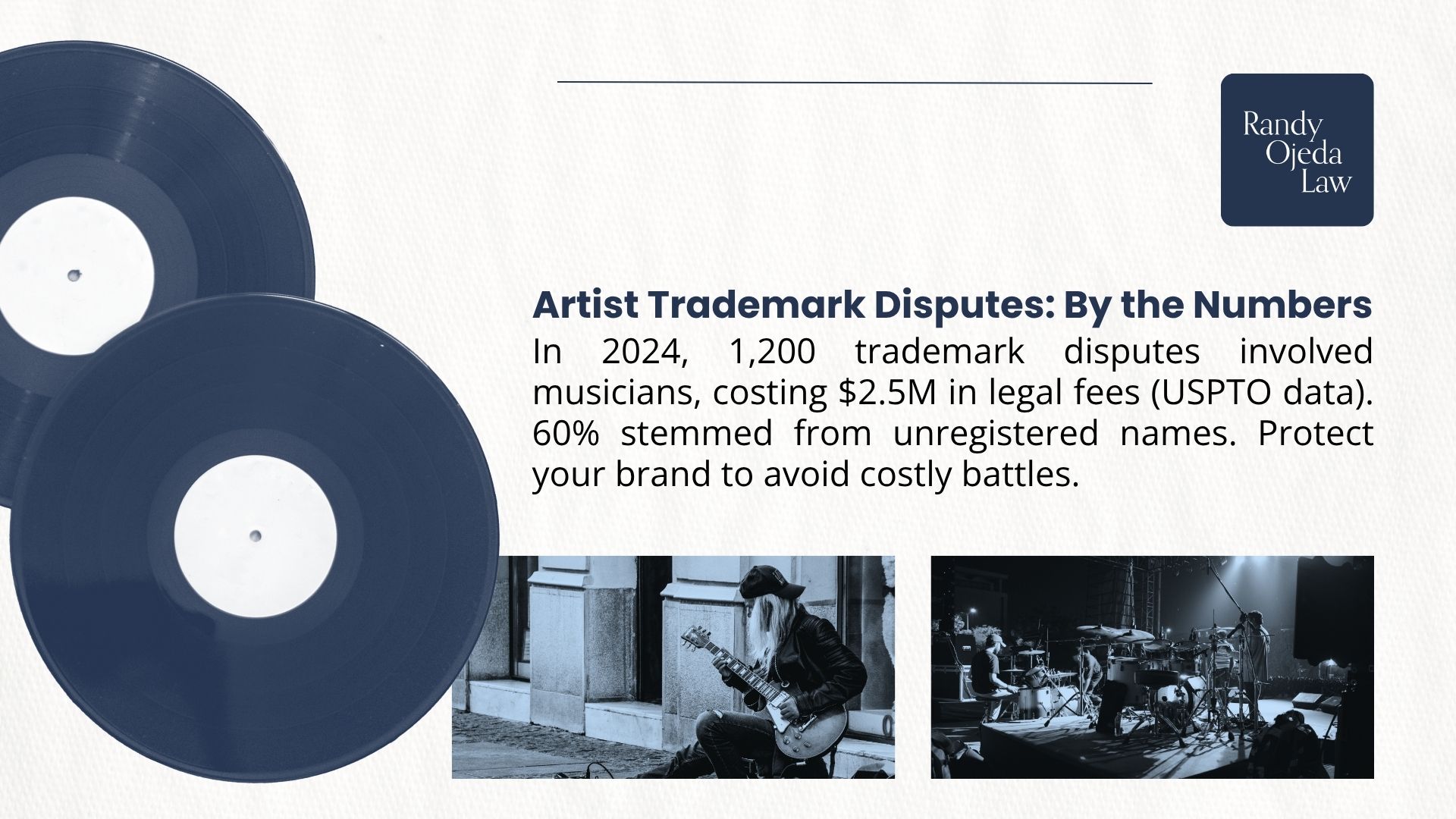
The Steps for How to Trademark an Artist Name
Getting a trademark registered isn't complicated, but it's detailed. Missing a step or doing something wrong can torpedo the whole application.
Search Everything First
Before spending money on an application, check if the name is even available. The USPTO has a database called TESS (Trademark Electronic Search System) that shows registered trademarks. But that's just the start.
A proper search looks for exact matches, similar spellings, names that sound alike, and anything that might confuse consumers. Even names that aren't formally registered can block an application if someone's been using them in business. That's called a "common law trademark." Internet searches matter as much as the official database.
This is where DIY attempts usually fall apart. People check the exact name, see it's clear, and file. Then they get rejected because there's a phonetically similar name they didn't catch. Professional trademark searches cost money but catch these issues before they become expensive problems.
Pick the Right Classes
Trademark applications require choosing which categories of goods and services the name will be used for. Artists typically need these classes:
| Class | What It Covers | Examples for Musicians |
|---|---|---|
| Class 9 | Digital media and recordings | Downloaded songs, music videos, digital albums |
| Class 41 | Entertainment services | Live concerts, performances, streaming content |
| Class 25 | Apparel | Band t-shirts, hats, tour merch |
Class selection gets tricky for artists. The USPTO has specific requirements about how performers can describe their use of a name versus how record labels describe theirs. Pick the wrong description and the application gets rejected. A music copyright lawyer who handles trademarks regularly knows which descriptions actually work.

Fill Out the Application Correctly
The USPTO application wants details: who owns the trademark, what their citizenship is, proof the name is being used (called a "specimen"), what basis the filing uses, and exactly what goods or services connect to the name.
Solo artists usually file as individuals. Bands have to list every member as a joint owner unless they've set up an LLC or corporation to own the trademark instead. That ownership structure matters a lot if the band changes lineups later or breaks up.
Applications can be filed based on "intent to use" (reserving a name before actually using it) or "use in commerce" (already using the name in business). Intent-to-use applications need proof of actual use before final registration happens.
Important Note
If the trademark includes someone's actual name or face, written permission from that person has to be submitted with the application. Can't trademark someone else's identity without their consent.
File Through the USPTO System
The online system is called TEAS (Trademark Electronic Application System). Filing fees run $250 to $350 per class depending which option gets selected. Add in the cost of professional searches and legal help, and realistic budgets land around $1,600 to $2,500 for the whole thing.
Sure, that seems expensive. But consider what happens when an artist spends five years building a following, then discovers someone else has superior trademark rights to the name. That scenario costs way more than getting it right the first time. Understanding music lawyer costs upfront helps avoid much bigger expenses later.
Deal With Office Actions
USPTO examiners review every application and often send back something called an "office action," basically questions or objections that need responses. Common issues include confusion with existing marks, specimens that don't properly show trademark use, or goods and services descriptions that don't meet USPTO standards.
Responding to office actions takes legal knowledge. Weak responses get applications abandoned. Good responses get trademarks approved. This is another point where having a music contract lawyer who handles IP work makes a real difference in outcomes.
How Long Does All This Take and What Does It Really Cost?
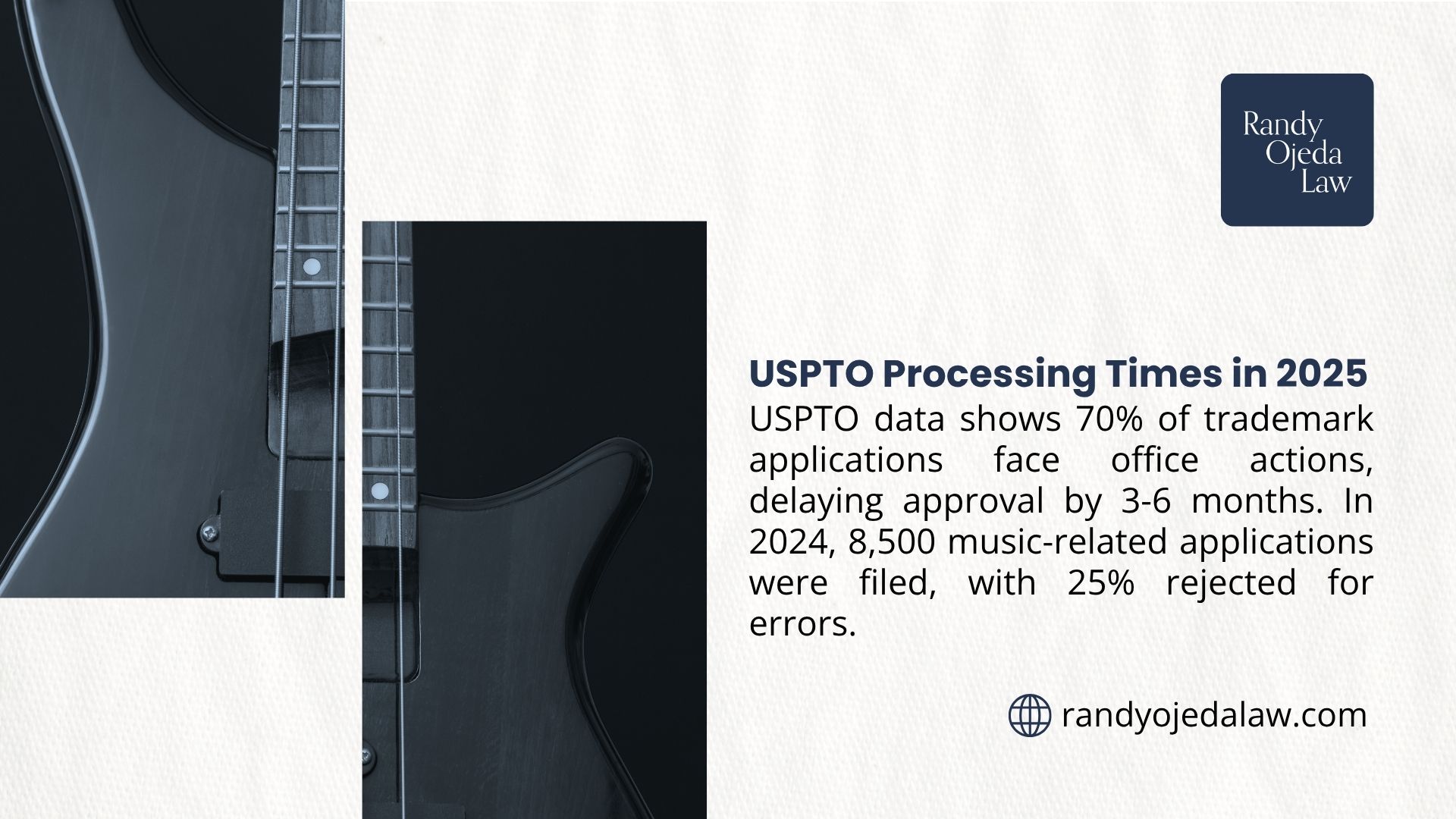
From filing to final registration usually takes 8 to 18 months if everything goes smoothly. Office actions, oppositions from other trademark owners, or other complications stretch that timeline out significantly.
Cost breakdown looks like this:
- Professional trademark search: $300-800
- USPTO fees: $250-350 per class filed
- Attorney time for application prep and filing: $800-1,500
- Responding to office actions if they come up: $400-1,200
These numbers add up, but they're tiny compared to what rebranding costs after a trademark conflict forces a name change. Artists who cut corners here often regret it when legal problems show up later.
Special Issues When Trademarking a Band Name
Bands face complications solo artists don't deal with. Who actually owns the name? What happens if a member quits? What if the band splits up?
Options include joint ownership by all members, creating an LLC or corporation that owns the trademark, or having one member own it while others get licensed use. Each approach has different implications for control and what happens when the lineup changes.
Smart bands hammer out these details before filing anything. A music contract review lawyer can draft agreements that address ownership upfront. Those conversations feel uncomfortable but prevent the ugly disputes that have destroyed countless bands.
Keeping the Trademark Active After Registration
Getting the registration isn't the end of it. Trademarks need maintenance filings to stay valid. Between years five and six after registration, owners file a Declaration of Continued Use with proof the name is still being used in business.
Another renewal filing happens between years nine and ten, then every ten years after that. Miss these deadlines and the trademark gets cancelled. Then anyone can grab the name.
Trademark owners also need to watch for infringers and actually enforce their rights. Letting unauthorized use slide can result in losing the trademark through abandonment. A music licensing lawyer can set up monitoring and enforcement procedures.
What About Protection Outside the United States?
USPTO registration only covers the U.S. Artists who tour internationally or release music in other markets need separate protection in those countries.
The Madrid Protocol lets artists file one international application covering multiple countries, which is cheaper and easier than filing separately in each one. But not every country participates, and some major markets still require direct filing.
International protection becomes important as streaming makes audiences global. An artist might blow up in South Korea, Brazil, or Germany without expecting it. Having trademark protection there beforehand prevents messy situations.
How Trademark Ownership Affects Music Business Revenue
Trademark rights connect to money in ways beyond just stopping name theft. A music royalty lawyer can explain how trademark ownership affects different income sources.
Sync licenses, mechanical royalties, performance rights, merchandising deals, all of these work better with clear trademark ownership. Brands and advertisers prefer artists who own proper rights to their names because it eliminates clearance headaches and legal risks.
Plus, trademarked artist names are assets that can be bought, sold, or licensed. That creates potential income even after retirement. The brand value grows with commercial success and recognition.
Get Legal Help Protecting Your Artist Name
Trademarking an artist name means dealing with federal regulations, USPTO procedures, and legal technicalities where mistakes blow up. This isn't the place to DIY and hope for the best.
Randy Ojeda Law handles music industry trademark work regularly. Whether launching a career or already established, proper trademark protection forms the foundation everything else builds on.
For More Information
- • How Much Does a Music Lawyer Cost?
- • How Much Does It Cost to Copyright an Album?
- • Music Intellectual Property Lawyer Services