Securing your band's name and logo through trademark registration is the most reliable way to protect your creative identity. In the United States, more than 700,000 new trademark applications are filed each year with the USPTO (United States Patent and Trademark Office), and music-related filings represent a growing portion of that number.
This guide walks you through the exact legal path for how to trademark a band name and logo, from conducting a clearance search to final registration. It also explains costs, classes, and documentation requirements, helping you avoid rebranding nightmares or infringement disputes that can cost artists tens of thousands of dollars.
By the end, you'll know precisely how to trademark a band name and logo with confidence, and when it's smarter to let a music lawyer handle the filings for long-term protection.
How to Trademark a Band Name and Logo Before the Market Does It for You
In 2024, the USPTO reported over 60,000 live filings under music, entertainment, and apparel categories, proof that competition for distinctive marks is intense. The music industry moves fast; a catchy name can trend overnight, and if another act files before you, they may legally block your future use.
For example, several emerging bands in 2023 were forced to change their names mid-tour after receiving cease-and-desist letters from prior registrants. A registered trademark prevents such outcomes by granting you nationwide priority rights and the ability to act against copycats on platforms like Spotify, Apple Music, and YouTube.
| Why Speed Matters | Typical Risk for Delay |
|---|---|
| Another band files your name first | Forced rebranding costing $5,000–$10,000 in design, digital cleanup, and PR |
| Merch retailers reject unregistered marks | Lost income from halted sales |
| Streaming platforms honor the first registrant | Removal of the artist profile or songs |
| Trademark trolls file early | Expensive buyback or litigation (average legal cost: $20,000+) |
A registered trademark adds legal credibility to your brand, making sponsorships, merch collaborations, and publishing deals easier to secure. Acting early not only shields your name but positions your band for future licensing and monetization.
How to Trademark a Band Name and Logo from Search to Registration
Below is the clear, seven-stage process used by professionals and the USPTO. Each stage builds on the last, so missing one step often leads to refusals or expensive re-filings.
Stage 1: Comprehensive Clearance Search
The first step is to confirm your name and logo aren't already registered. Search the USPTO TESS database, state registries, and music platforms for similar names. Roughly 18% of trademark refusals are due to confusing similarity with existing marks.
If you're unsure how to interpret search results, a music contract review lawyer can identify potential conflicts and provide clearance opinions.
| What to Search | Tools | Common Mistake |
|---|---|---|
| Identical and similar band names | USPTO TESS, Google, Spotify, Apple Music | Only checking exact spellings |
| Similar logos or symbols | Image search, trademark databases | Ignoring visual resemblance |
| Domain and social handles | Namechk, GoDaddy | Overlooking inactive but registered domains |
Stage 2: Class and Category Selection
Every trademark must be filed under specific "classes" that define your goods or services. Bands usually file under:
| Class | Description | Example |
|---|---|---|
| Class 9 | Digital music, sound recordings | Spotify albums or digital downloads |
| Class 41 | Live performances, entertainment services | Concerts, live shows |
| Class 25 | Apparel and merchandise | Band T-shirts, hats, or hoodies |
Incorrect classification is one of the most common causes of office actions. A music intellectual property lawyer ensures you pick the right mix.
Stage 3: Specimens and Proof of Use
The USPTO requires proof that you're actually using your name or logo in commerce. These are known as "specimens."
| Acceptable Specimens | Examples |
|---|---|
| Live concert promotions | Ticketing pages, event flyers |
| Streaming platform listings | Spotify, Apple Music, or Bandcamp pages |
| Merchandise pages | Online store or Shopify listings |
A single missing or invalid specimen can delay approval by months. High-quality screenshots and URLs serve as strong evidence.
Stage 4: Filing Basis: "Use in Commerce" vs. "Intent to Use"
If you're already using your name publicly, file under Section 1(a) (Use in Commerce). If you're preparing to launch soon, file under Section 1(b) (Intent to Use). According to USPTO data, about 40% of artist trademarks start as Intent-to-Use filings and later convert once tours or album releases begin.
For larger projects, it's wise to let a music contract negotiation lawyer handle the legal filings so your future label deals align with ownership rights.
Stage 5: USPTO Examination and Office Actions
An examiner reviews your application, usually within 6–8 months. If they find conflicting marks, they issue an Office Action.
You'll have three months to respond, extendable by another three months. The most frequent reasons for refusal include the likelihood of confusion, descriptive names, or missing evidence.
Strong responses often include evidence of prior use or distinguishing brand elements. A professional music copyright lawyer can handle this part efficiently.
Stage 6: Publication and Opposition
If approved, your mark is published in the USPTO Official Gazette for 30 days. During this period, anyone with an existing trademark can file an opposition. In 2024, around 3% of filings faced opposition, mostly from record labels or merch companies.
If no one objects, your mark proceeds to registration. If you filed under Intent-to-Use, you'll receive a Notice of Allowance and must submit a Statement of Use.
Stage 7: Registration and Maintenance
Once registered, your mark gets a federal registration number (e.g., U.S. Reg. No. 7,654,321). Between years 5–6, you must file a Declaration of Use (Section 8), and every 10 years, renew it. Neglecting maintenance leads to automatic cancellation, and you lose all rights.
Smart Preparation for How to Trademark a Band Name and Logo
Before you even file, document ownership and creative roles. Many bands lose trademarks not because of the USPTO but because of internal disputes.
| Preparation Step | Why It Matters | Example |
|---|---|---|
| Written ownership agreement | Prevents future disputes | Each member signs who owns what |
| Logo rights assignment | Ensures the designer doesn't own the logo | Signed release from the artist |
| Prior use documentation | Proves senior rights | Old show flyers, merchandise receipts |
Most cases that reach litigation could've been avoided with simple written agreements. For continued guidance, Randy Ojeda Law's counsel for a creative plan can help you stay legally organized.
Classes and Specimens for How to Trademark a Band Name and Logo
Choosing the right class ensures your mark is properly protected. Most bands file under two to three classes, depending on what they sell or perform.
| Category | Class | Proof Example |
|---|---|---|
| Live performances | 41 | Concert posters, event pages |
| Sound recordings | 9 | Streaming listings, album art |
| Merchandise | 25 | Store product pages |
With over 40,000 active filings in these categories, precision matters. A music licensing lawyer can ensure your submission meets current standards.
Costs, Timing, and What Shifts the Numbers
Trademark costs vary by scope. USPTO fees start at $250 per class under the TEAS Plus system. Including legal help and additional filings, artists typically spend between $750–$2,000 total. Processing times average 9–12 months from filing to registration.
| Expense Type | Typical Range | Notes |
|---|---|---|
| USPTO Fees | $250–$350 per class | Mandatory government fee |
| Attorney Review | $300–$700 | Recommended for multi-class filings |
| Specimen Preparation | $0–$200 | Depends on documentation quality |
| Opposition Response | $500–$1,500 | Only if contested |
Full cost transparency is outlined on Randy Ojeda Law's pricing page.
How to Check Availability Before You Trademark a Band Name and Logo
A name search is more than typing it into Google. The USPTO rejects one in five applications for conflicts that could have been detected in a proper clearance review.
| Search Layer | What to Check | Risk |
|---|---|---|
| USPTO Database | Similar marks in Classes 9/41/25 | Likelihood of confusion |
| Marketplaces | Spotify, Apple Music, YouTube | Active bands with the same name |
| Domains & Social Media | URL and handle availability | Reputation dilution |
| State Registries | Business names | Overlapping LLCs |
Conducting an early band name trademark search can save months of delay and thousands in legal costs.

Name vs. Logo: How to Trademark a Band Name and Logo Together or in Phases
Some bands file both the word mark and the design mark at once, while others phase it out. Filing both costs more upfront but saves future disputes over branding.
| Filing Strategy | Pros | Cons |
|---|---|---|
| Name first | Cheaper and faster | Doesn't protect logo design |
| Logo first | Protects visuals for merch | Narrower coverage |
| Dual filing | Covers all assets | Higher fees per class |
Bands that trademark both early often gain stronger leverage in sponsorship and merch licensing negotiations.
Common Office Action Issues and Fast Fixes
Office actions delay about 30% of filings. Most are fixable if addressed quickly.
| Problem | Cause | Resolution |
|---|---|---|
| Likelihood of confusion | Similar existing mark | Submit arguments or consent agreements |
| Descriptive mark | Too generic (e.g., "The Rock Band") | Add logo or distinctive element |
| Specimen issue | Mockup, not real use | Replace with valid proof |
| Ownership dispute | The label owns the mark | Provide assignment or clarify ownership |
Timely and accurate responses (within 3–6 months) ensure your application stays active. Working with a music label lawyer can streamline this process.
Extra Protection for Bands: Royalties, Licensing, and Publishing Rights
Trademark registration only secures your name and logo, not your music or royalties. Protecting your brand across legal layers, including royalties, publishing, and licensing, is crucial.
A band's name should match on all revenue channels: royalty statements, publishing contracts, sync licenses, and merch agreements. If discrepancies appear, payments may be delayed or misdirected. Consulting with a music royalty lawyer or music publishing lawyer ensures brand and financial consistency.
State Filings vs. Federal Action for How to Trademark a Band Name and Logo
Most bands think a state trademark is enough, but it covers only one state. A federal registration grants nationwide protection, recognized by customs and online platforms.
| Type | Scope | Typical Fee | Advantage | Limitation |
|---|---|---|---|---|
| State Registration | One state | $50–$150 | Quick and simple | No protection outside the state |
| Federal USPTO | Nationwide | $250–$350 per class | Full U.S. rights and enforcement | Longer approval timeline |
More than 95% of major artists rely on federal filings for long-term security. A copyright & IP protection strategy combines both if your operations span multiple states.
Practical Roadmap for How to Trademark a Band Name and Logo in One Pass
Even with multiple classes, you can file efficiently if you organize early.
| Step | Action | Timeline |
|---|---|---|
| 1 | Clearance search and ownership setup | Week 1 |
| 2 | Class selection and specimen preparation | Week 2–3 |
| 3 | USPTO filing submission | Week 4 |
| 4 | Examination and office actions | Month 4–8 |
| 5 | Publication and registration | Month 9–12 |
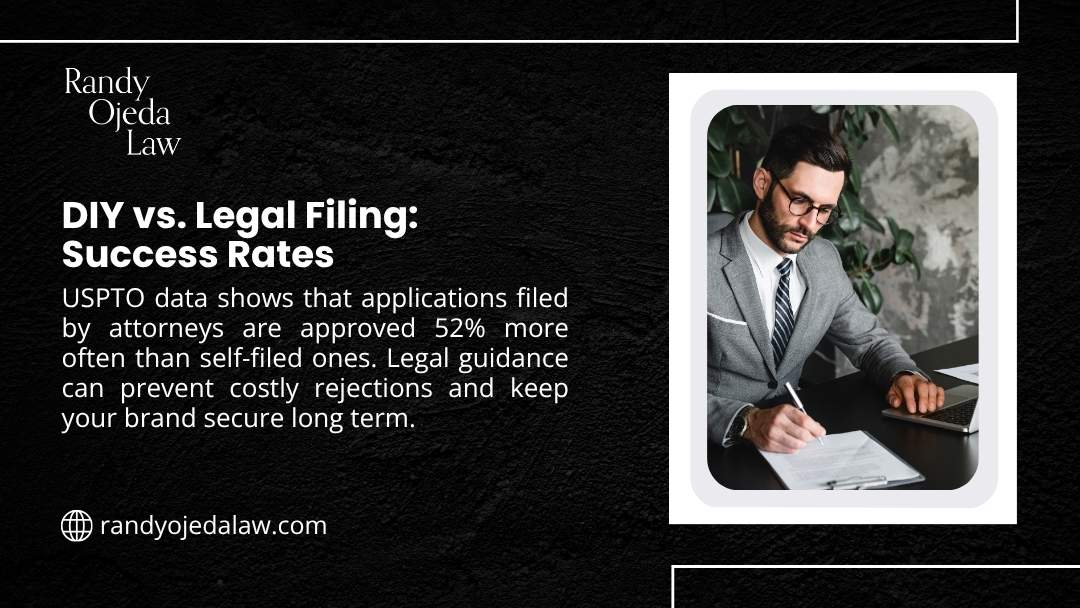
Bands that work with counsel typically complete this process 25–30% faster than DIY filers due to reduced error rates.
Where Counsel Adds Real Value on How to Trademark a Band Name and Logo
Most artists fail trademark exams not for legal reasons but procedural ones. Having a music lawyer for bands prevents that.
| Risk | Typical Outcome | Legal Fix |
|---|---|---|
| Missed deadlines | Application abandonment | Calendar management by counsel |
| Conflict with the label | Ownership confusion | Negotiated IP clause |
| Specimen rejection | Delayed registration | Corrected submission |
| Opposition filing | Costly defense | Early settlement or coexistence agreement |
An experienced attorney helps secure your brand once, rather than refiling multiple times.

Ready to Move: File Now, Tour Later
Every successful band becomes a business, and in the U.S., business names belong to whoever files first. Delaying your trademark gives others a window to claim your identity. If you're serious about owning your sound, merch, and reputation, start the process today with Randy Ojeda Law, the firm trusted by independent artists nationwide.
Whether you need contract guidance, brand protection, or full creative counsel, book a consultation through the contact page and take the first step toward protecting your brand's legacy.