The discussion over whether 360 deals are bad for artists has strengthened as major labels depend on these contracts to secure revenue from every corner of an artist's career. This article unpacks how 360 deals work, why labels created them, who they benefit, who they hurt, and what an artist should consider before signing one.
What Is a 360 Deal in Music and Why Does It Exist Today?
A 360 deal, sometimes called a 360 contract or 360 record deal, is a music-industry agreement granting a record label a share of an artist's revenue across several income streams. Instead of earning only from recorded music, the label also takes a percentage from touring, merchandising, endorsements, sponsorships, publishing, brand collaborations, and other earnings tied to the artist's career.
To understand why 360 deals appeared, you only need to look at the decline of traditional record sales. U.S. CD sales peaked in 2000 at more than 942.5 million units. Streaming dominated the years that followed. Revenue from digital downloads fell by 25% in 2017 alone, while physical album sales continued to shrink. Record labels responded by moving toward diversified revenue agreements.
In practice, signing a 360 deal means giving the label long-term access to nearly every profitable part of the artist's career. The label justifies this by promising marketing, promotional investments, touring support, an advance, distribution infrastructure, and access to industry networks that independent artists rarely obtain on their own.
What 360 Deals Promise: The Potential Upsides for Artists
Despite their negative reputation, 360 deals are not automatically damaging. The structure can benefit artists who need substantial support early in their careers. The biggest advantage is access to capital. Music production, touring, merchandise development, and marketing require serious investment.
A label signing 360 agreements often provides tour support, brand development, radio promotion, playlist pitching, professional marketing campaigns, and public relations teams. These resources can be transformative. An artist working alone cannot easily match the reach of a label with global distribution and connections.
Another advantage lies in infrastructure. When an artist signs a 360 deal, they gain access to producers, songwriters, endorsement partners, licensing opportunities, and collaborators who may not entertain an independent approach.
In a best-case scenario, a 360 record deal can accelerate the early stage of a career for a young musician with a limited budget or no team.
Why 360 Deals Often Turn Bad for Artists: The Structural Risks
The primary criticism of 360 deals is not that they exist, but how they are structured. Many of them favor the label at nearly every point. The core issue is revenue sharing. In a standard 360 deal, the label takes a percentage not only of recorded music but also of touring, merchandising, endorsements, sponsorships, and sometimes even revenue from social-media content.
Cross-collateralization
One of the most damaging clauses in many 360 deals. This allows the label to recoup losses from one revenue stream using earnings from another. If the label overspends on an album, they can collect the shortfall from touring or merchandise. The artist often sees little profit until the label has fully recouped.
Loss of creative control
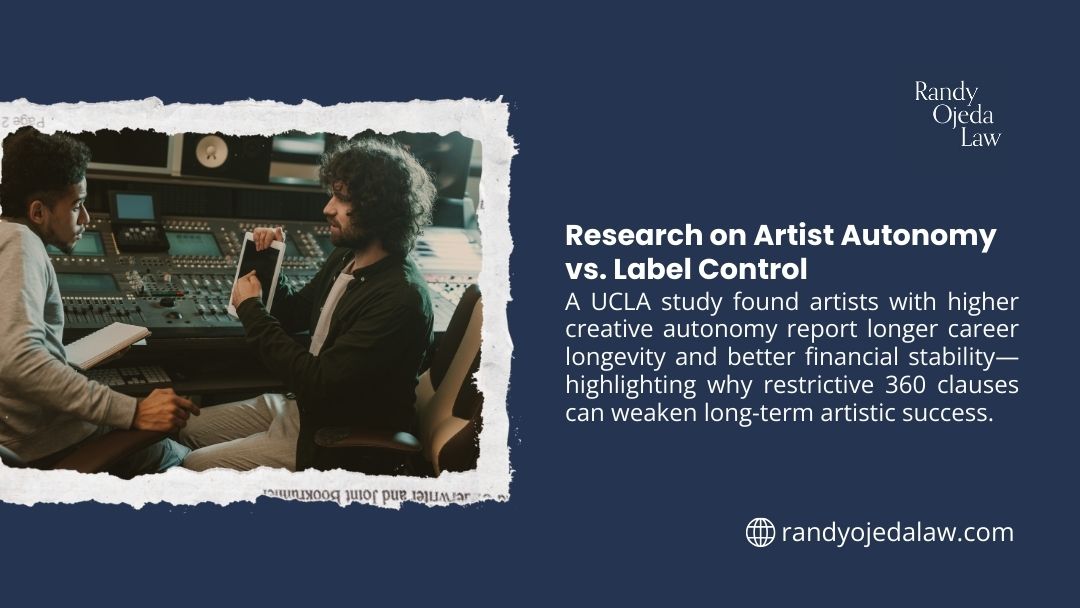
A 360 contract may give the label approval authority over tours, brand deals, merchandising decisions, and sometimes even release timelines. Artists find themselves operating under corporate pressure, limiting their freedom to shape their music careers.
Transparency issues
Artists regularly report a lack of clarity in accounting, vague expense deductions, and unpredictable payment schedules. These controversies have fueled the belief that 360 deals are bad for artists, particularly for those without skilled legal support.
Legal scholars have raised red flags about unconscionability in some 360 deals. Research published by the Cardozo Arts & Entertainment Law Journal argues that younger musicians often lack bargaining power and knowledge when signing these contracts, increasing the likelihood of unfair terms.
Studies and Industry Data: The Real Impact of 360 Deals
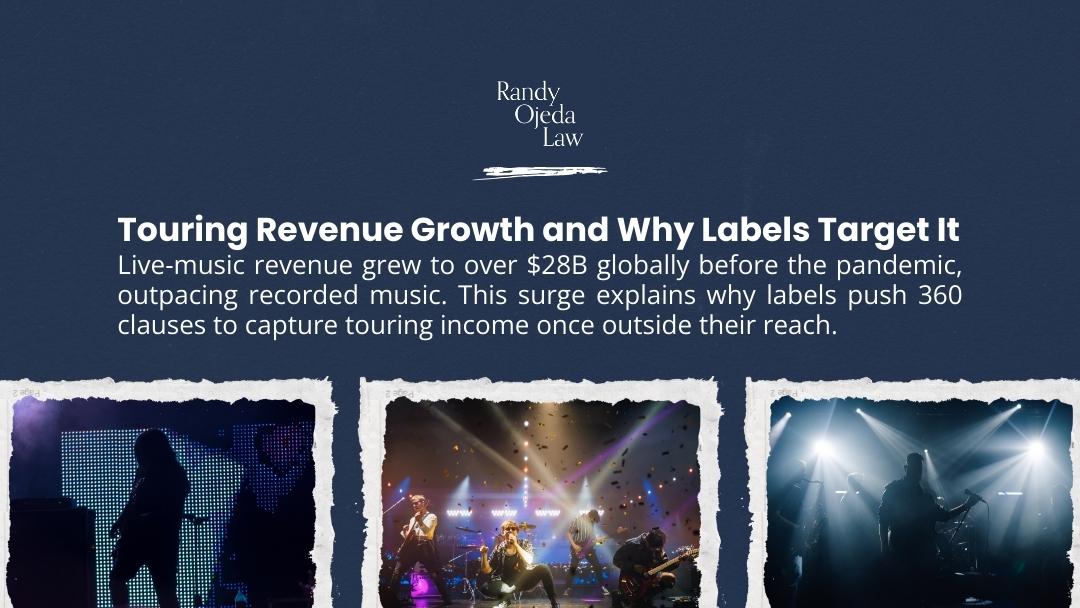
Research shows a direct connection between the industry's shift to streaming and the rise of 360 deals. U.S. recorded-music industry revenues dropped roughly in half between the late-1990s peak and the mid-2010s, largely due to a collapse in physical sales and digital disruption. As companies moved toward diversified revenue streams, 360 agreements became increasingly common.
Academic studies warn that a label's broad entitlement to an artist's income can interfere with fiduciary duties expected in a traditional record deal. When a label profits more from touring merchandise or brand endorsements than from recordings, their priorities shift. They may pressure artists to spend more time touring than developing original work.
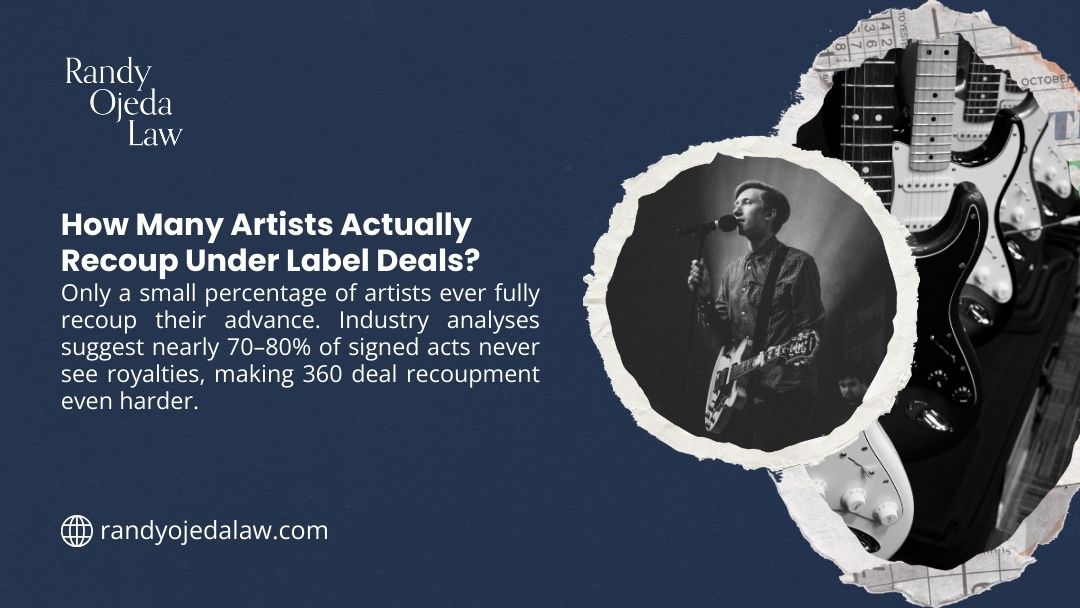
Reports from music business analysts also show that many artists signed to 360 deals struggle to recoup advances, leading to long-term financial restraints. Because the label controls the marketing budget and often overspends without the artist's approval, recoupment becomes difficult.
The central finding across studies is that 360 deals tend to be beneficial to major labels but frequently harmful to artists unless negotiated by experienced counsel.
Who Might Benefit from a 360 Deal, and Who Should Avoid It?
A 360 deal can benefit artists who lack funding, industry connections, or professional teams. For musicians with no support system, limited online presence, and no infrastructure for touring or branding, a label's investment can be life-changing.
However, established artists or those with a strong social-media following should proceed with caution. If an artist already earns from merchandise, touring, or brand partnerships, handing a percentage of these income streams to a label may severely limit long-term earnings.
Artists who value creative independence should also avoid 360 deals. Labels can require creative approvals that slow down release schedules, shift artistic vision, or impose commercial strategies.
Finally, any artist without legal representation should avoid signing a 360 deal. Contract language in these agreements is complex, and missing a single clause can affect income for years.
How Artists Can Protect Themselves Before Signing a 360 Deal
Artists exploring a 360 music deal should take time to review every clause with a knowledgeable music contract lawyer who understands the complexities of U.S. music law. Professional legal guidance is essential for negotiating percentages, defining revenue streams, limiting cross-collateralization, and protecting rights long term.
Before signing anything, artists should make sure the contract clearly defines which income streams the label can access, how recoupment will be calculated, and whether revenue from touring or merchandising can be used to pay back unrelated expenses.
It's also wise to negotiate carve-outs for side projects, independent collaborations, or non-music ventures to prevent the label from claiming revenue that does not directly relate to the artist's recordings.
If a label refuses to adjust unfair terms or dismisses reasonable concerns, the artist may be better off exploring alternatives such as distribution partnerships, licensing agreements, or independent release strategies that provide far more control over their long-term career.
Conclusion: Are 360 Deals Bad for Artists?
A definitive answer depends on the artist, their leverage, and the exact terms of the deal. A 360 deal is not automatically harmful, but most are structured to favor the label, not the musician. The model gives labels long-term profit from nearly every part of the artist's income while limiting artistic independence.
For many musicians in the United States, especially those with existing audiences or strong social-media followings, a 360 deal may reduce earnings rather than enhance them. However, a carefully negotiated agreement supported by an experienced music lawyer can offer protection and allow emerging artists to take advantage of a label's resources without sacrificing their future.
Artists who understand their rights, protect their revenue streams, and negotiate from an informed position stand the best chance of turning a 360 contract into an opportunity rather than a setback.